
Why There’s No Such Thing as the "Best" Martial Art
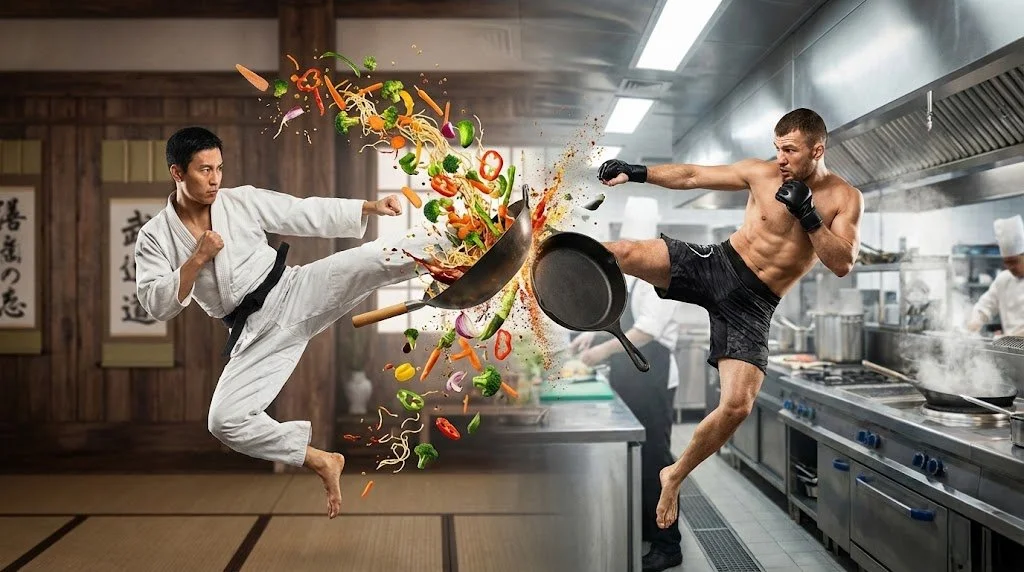
Which style is better, Krav Maga or MMA? Does Wing Chun beat Shaolin? Which martial art is the best? I hear so many people debating questions like these online. It is the source of conflicts and arguments, and though it makes for some entertaining headlines, no one ever manages to answer these questions.
That's because asking which art is the best just isn't a good question.
Complex problems always have multiple solutions. To solve the problem of hunger, cultures have developed hundreds of different solutions. They've invented cooking methods, tools and specialized uses for their native flora and fauna. So is one type of cuisine better than another? Is Italian food better than Chinese food?
Critics will have preferences and opinions, but the truth is that both cuisines are incredibly varied with very different flavor profiles. No one can say that one is objectively superior to the other.
Now let's go a step further. If you look at the cooking methods used in both cuisines, you will find overlapping techniques. Roasting, caramelizing, and deglazing are used in many styles all over the world because they are based on the chemical reactions that transform ingredients.
To be great at cooking, a chef must understand the science of their tools and techniques.
Martial arts is no different.
The underlying principles of martial arts are based in sciences like physics, anatomy, neuroscience, and psychology. Different fighting styles have different "flavors," thanks to the cultures they come from, but all fighting techniques can grant their efficacy to science.
Just like there are only a few ways to caramelize an onion, there are finite ways to execute an arm bar. No matter how much "sauce" you throw on it, our joints can't invent new ways to bend. Until we encounter aliens or develop vastly new technology that alters our anatomy, the human body will move as it has always done.
So why the endless debate?
The problem with most martial arts today is that they are partial arts. Schools have taken one set of tools and techniques and created a teachable system and a culture out of them.
To put this in cooking terms, some people are getting advanced degrees in frying without learning how to use an oven. And that's fine, as long as students aren't led to think that frying is all there is. But you can see how this leads to pointless discussions like, "Is frying better than steaming?"
Like a well rounded chef understands the chemistry of cooking, a well rounded martial artist also knows the science behind their craft. Practitioners of science can deploy techniques derived from any cultural style. This becomes an exercise in creativity. Real artistry lies in picking and choosing what will work in the moment. The true weapon is what in the martial artists' hands, is it in their minds.
At VCB Dojo, what we encourage our students to become proficient in as many techniques as possible. That's why we teach everything from rolling and leaping to striking, grappling, joint locks, and weaponry. Because ultimately, what gives any martial artist the advantage is options.
When it comes to self defense, it's impossible to predict when a situation that requires our skill will arise. But when it does, we hope that every student has the versatility and creativity to solve that complex problem.
If you're interested in how martial arts training can change your thinking, come on out and train with us. You can watch a class and ask questions, or jump right in to a workshop. Contact us any time.